Water Tech Is Having Its Moment — Here's Why Investors Are Paying Attention
For years, water technology has been the quiet sibling of the cleantech family. While solar panels, electric vehicles, and battery storage captured the lion's share of headlines and investment dollars, innovations in water purification, desalination, and smart water management attracted relatively modest attention.
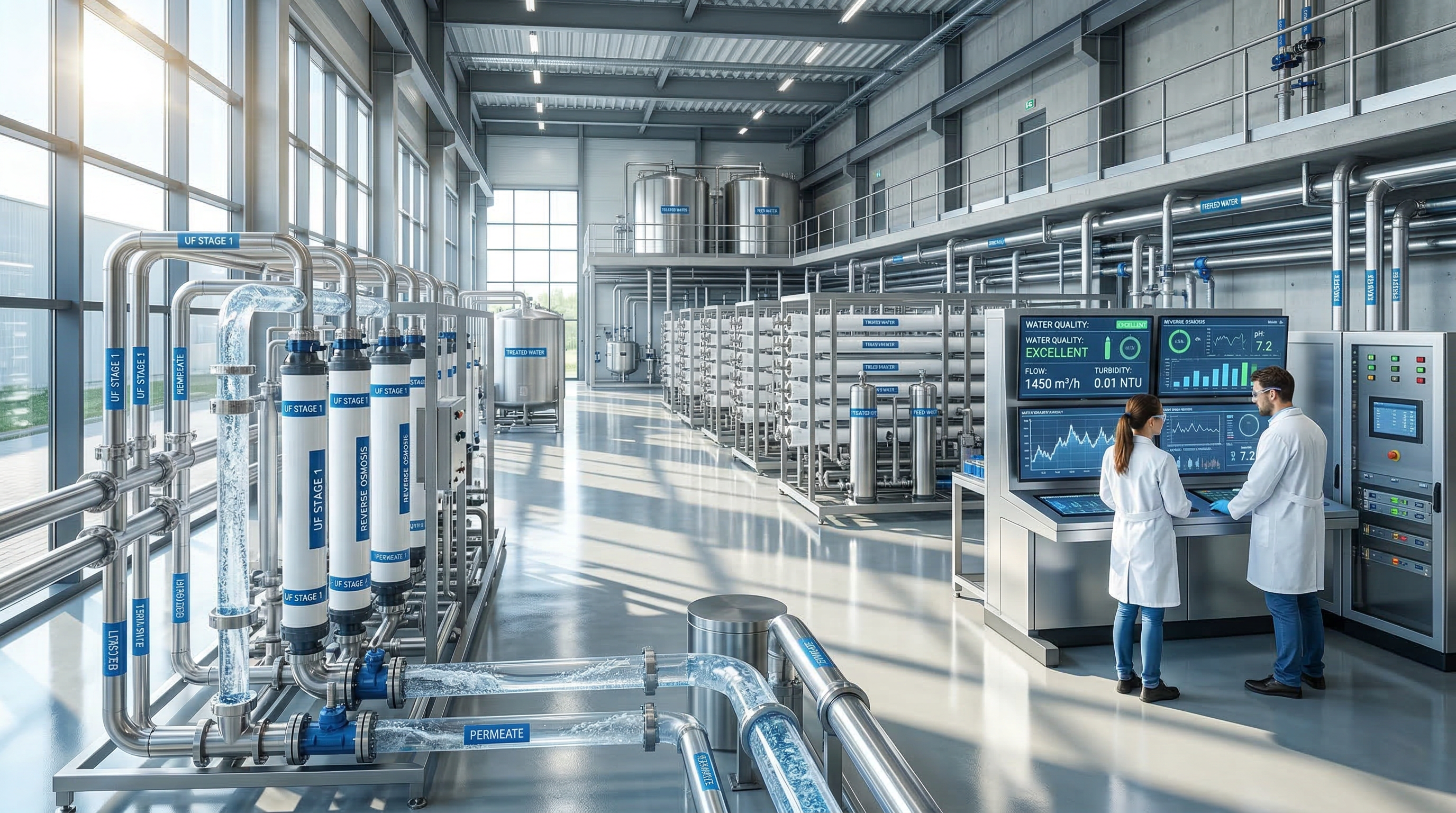
For years, water technology has been the quiet sibling of the cleantech family. While solar panels, electric vehicles, and battery storage captured the lion's share of headlines and investment dollars, innovations in water purification, desalination, and smart water management attracted relatively modest attention.
That is changing — fast.
In 2026, water tech is experiencing what industry analysts at Emerald Technology Ventures have called its "breakout moment." A convergence of factors — escalating water scarcity driven by climate change, aging infrastructure in developed nations, tightening regulatory standards, and a wave of technological breakthroughs — is pushing water to the top of the cleantech investment agenda.
The Scale of the Crisis
The numbers are stark. According to the United Nations, roughly 2.2 billion people worldwide lack access to safely managed drinking water. By 2030, global water demand is projected to exceed supply by 40% in water-stressed regions. In the United States alone, the American Society of Civil Engineers has estimated that the country needs over $600 billion in water infrastructure investment over the next two decades just to maintain current service levels.
Climate change is intensifying the problem. Droughts are becoming longer and more severe in regions from the American Southwest to sub-Saharan Africa to southern Europe. The Colorado River Basin, which supplies water to 40 million people, has experienced its driest period in 1,200 years. Lake Mead and Lake Powell, the two largest reservoirs in the U.S., are at historically low levels.
At the same time, flooding events are increasing in frequency, overwhelming water treatment facilities and contaminating freshwater supplies. The World Resources Institute estimates that by 2040, roughly 33 countries will face extremely high water stress, affecting 1.5 billion people in regions spanning the Middle East, North Africa, and South Asia.
Desalination: The Technology Gets Smarter and Cheaper
Desalination — the process of removing salt from seawater to produce freshwater — has long been seen as a potential solution to water scarcity, but its high energy costs (roughly 3-4 kWh per cubic meter for reverse osmosis), brine disposal challenges, and environmental impact have limited its adoption.
New technologies are changing the calculus.
Solar-Powered Desalination
Researchers at MIT have developed a solar-powered desalination system that requires no external batteries and can produce large quantities of clean water despite variations in sunlight. The system uses multiple evaporation stages in a stepped configuration, reaching efficiency rates of 385% — meaning it extracts nearly four times more fresh water per unit of solar energy than conventional solar stills.
This technology is particularly promising for off-grid communities and remote regions where grid electricity is unavailable or unreliable.
Electrochemical Desalination
The University of Michigan has introduced carbon cloth electrodes that can remove boron and other contaminants from seawater without expensive chemicals or high pressure. This electrochemical approach uses electrical charge to selectively remove ions, potentially reducing energy consumption by 20-30% compared to conventional reverse osmosis.
Subsea Desalination
Perhaps most intriguingly, subsea desalination — performing the process on the ocean floor where natural pressure assists filtration — has moved from theory to early-stage prototyping. Israeli startup Makai Ocean Engineering is testing systems that leverage hydrostatic pressure at ocean depth to drive reverse osmosis, eliminating the need for high-pressure pumps and reducing energy costs significantly.
Forward Osmosis and Novel Membranes
Next-generation membranes using graphene oxide, carbon nanotubes, and biomimetic aquaporin proteins promise higher water flux rates, lower fouling, and reduced energy requirements. Forward osmosis systems, which use a draw solution to pull water through membranes rather than pushing it with high pressure, are being commercialized for industrial wastewater treatment and may eventually scale to municipal desalination.
AI-Powered Water Management: Leak Detection and Optimization
Artificial intelligence is bringing new efficiency to water systems. The challenge is massive: aging water infrastructure in developed countries loses 30-40% of treated water to leaks before it reaches consumers. In the U.S., an estimated 6 billion gallons of treated water are lost to leaks every day.
Smart Leak Detection
Companies including Fracta, Xylem, and Echologics deploy AI-powered systems that combine acoustic sensors, satellite data, and machine learning to detect leaks in real time. AI algorithms analyze sound patterns, pressure fluctuations, and flow anomalies to pinpoint leak locations with meter-level accuracy, allowing utilities to prioritize repairs before small leaks become catastrophic main breaks.
Predictive Maintenance
IBM's Intelligent Water platform uses AI to predict pipe failures before they occur, analyzing historical data, soil conditions, pipe age, and maintenance records. Utilities can shift from reactive repairs to proactive replacement, reducing emergency call-outs by 30-40% and extending infrastructure lifespan.
Treatment Optimization
Water treatment plants use AI to optimize chemical dosing, adjust filtration parameters in real time, and predict equipment failures. Emagin, an Israeli startup, has demonstrated that AI-driven treatment optimization can reduce chemical use by 20-30% and energy consumption by 15%, while maintaining or improving water quality.
Demand Forecasting and Distribution
AI models predict water demand based on weather forecasts, historical consumption patterns, and special events, enabling utilities to optimize pumping schedules, reduce energy costs, and avoid over-extraction from reservoirs. Smart water grids can dynamically route water through distribution networks, balancing supply and demand across zones.
Atmospheric Water Generation: Harvesting Water from Air
Atmospheric water generators (AWGs) extract moisture from humid air, condensing it into potable water. While the technology isn't new, recent advances have made it more energy-efficient and cost-effective.
SOURCE Global (formerly Zero Mass Water) has deployed solar-powered hydropanels that extract water from air using desiccant materials and solar energy. Each panel can produce 4-10 liters of water per day, providing decentralized water sources for homes, schools, and remote communities without infrastructure.
Watergen, an Israeli company, manufactures large-scale AWG systems capable of producing 900-6,000 liters per day, targeting disaster relief, military operations, and water-scarce regions. The systems work best in humid environments but can function even at 20-30% relative humidity.
Advanced Filtration: Membrane and Nanomaterial Innovations
Water filtration technology is undergoing rapid innovation, driven by nanomaterials, biotechnology, and precision manufacturing.
Nanofiber Membranes
Researchers at Stanford University have developed electrospun nanofiber membranes that can filter out bacteria, viruses, and even PFAS (per- and polyfluoroalkyl substances — "forever chemicals") at lower pressure and higher flow rates than conventional membranes. These membranes could dramatically reduce the cost of point-of-use water treatment.
MOF-Based Filters
Metal-organic frameworks (MOFs) — highly porous crystalline materials — are being engineered to selectively capture specific contaminants including heavy metals, pesticides, and pharmaceuticals. MOF-based filters can remove contaminants at parts-per-trillion concentrations, addressing emerging pollutants that conventional treatment struggles with. For more on advanced materials innovation, see our coverage of next-generation solar technology.
Ceramic Membranes for Industrial Wastewater
Ceramic membranes withstand harsh chemicals, high temperatures, and abrasive particles, making them ideal for treating industrial wastewater. Companies including MANN+HUMMEL and Metawater are scaling ceramic membrane systems for oil and gas, mining, and chemical industries, enabling water reuse and reducing freshwater extraction.
Water Recycling and Reuse: Closing the Loop
Direct potable reuse — treating wastewater to drinking water standards — was once considered taboo. In 2026, it's becoming mainstream.
Singapore's NEWater
Singapore has been a pioneer, with its NEWater program providing up to 40% of the nation's water needs through advanced recycled water. The system uses microfiltration, reverse osmosis, and UV disinfection to produce water that exceeds drinking water standards, primarily used for industrial and indirect potable reuse.
California's Pure Water Programs
California cities including San Diego, Los Angeles, and San Francisco are implementing direct potable reuse systems. San Diego's Pure Water program aims to provide nearly 50% of the city's water supply through recycled wastewater by 2035. The multi-barrier treatment process includes ozonation, biological filtration, membrane filtration, reverse osmosis, and UV disinfection with advanced oxidation.
Industrial Water Reuse
Industries including semiconductors, pharmaceuticals, and food processing are implementing zero liquid discharge (ZLD) systems that recycle 95%+ of process water. Technologies including brine concentrators, crystallizers, and advanced oxidation enable industries to minimize freshwater intake and wastewater discharge.
The Startup Ecosystem: Companies to Watch
Venture-backed water tech startups are proliferating:
- Gradiant: Advanced desalination and industrial wastewater treatment using carrier gas extraction and other novel processes. Valued at over $1 billion.
- Epic Cleantec: On-site water recycling systems for buildings, treating greywater and blackwater for non-potable reuse. Installed in San Francisco high-rises.
- Aquaporin: Biomimetic membranes using aquaporin proteins (natural water channels in cells) for highly selective filtration.
- Moleaer: Nanobubble technology for water treatment, agriculture, and aquaculture, improving dissolved oxygen levels and reducing chemical use.
- Apana: AI-powered water management for commercial buildings, reducing consumption by 20-40% through real-time monitoring and optimization.
The Investment Surge: Why VCs Are Finally Paying Attention
Venture capital is following the opportunity. Water tech startups raised over $1.2 billion in 2025, and the momentum has carried into 2026. The sector benefits from a rare alignment: existential need, regulatory tailwinds, technological readiness, and growing corporate and consumer awareness.
Market Drivers
- Water scarcity impacts GDP: The World Bank estimates that water scarcity could cost some regions up to 6% of GDP by 2050.
- Regulatory pressure: Stricter regulations on PFAS, lead, microplastics, and other contaminants require advanced treatment.
- Corporate water targets: Companies including Google, Microsoft, and Coca-Cola have committed to water neutrality or positive water impact goals.
- ESG mandates: Institutional investors increasingly require portfolio companies to manage water risks.
For investors looking for the "next solar" — a sector with massive addressable markets, strong ESG appeal, and technological maturity approaching commercial scale — water tech may be it.
The Challenges: What's Holding Water Tech Back
Despite the momentum, water tech faces obstacles:
- Fragmented markets: Water is hyper-local. Unlike solar panels that work the same everywhere, water solutions must be customized to local water quality, regulations, and infrastructure.
- Conservative utilities: Municipal water utilities are risk-averse, slow to adopt new technology, and often underfunded.
- Low water pricing: In many regions, water is severely underpriced, failing to reflect its true scarcity or treatment cost. This undermines business cases for efficiency and reuse.
- Long sales cycles: Selling to utilities and municipalities involves procurement processes that can take 2-5 years.
The Water-Energy Nexus
Water and energy are inextricably linked. Water systems consume 4% of U.S. electricity for extraction, treatment, distribution, and wastewater processing. Conversely, energy production requires enormous water volumes for cooling, hydraulic fracturing, and biofuel crops.
This nexus creates both challenges and opportunities. Energy-intensive water technologies like desalination must be powered by renewables to avoid simply shifting environmental burden from water scarcity to carbon emissions. Solar-powered desalination, waste-heat-driven treatment, and energy recovery from wastewater (through anaerobic digestion and hydropower) represent integrated solutions addressing both challenges simultaneously.
Equity and Access
Advanced water technologies risk creating a two-tier system where wealthy communities access cutting-edge treatment while low-income regions make do with aging infrastructure. Equitable access must be a core principle. Decentralized, low-cost technologies like point-of-use filters, community-scale AWG systems, and solar-powered treatment can democratize access beyond centralized utilities.
The Bottom Line
The era of water as an afterthought in cleantech is definitively over. Water scarcity is no longer a distant future threat — it's a present reality affecting billions of people globally and representing trillions of dollars in economic activity and infrastructure investment needs.
Technology is rapidly catching up to the challenge. Desalination is getting cheaper and more energy-efficient. AI is making distribution networks smarter and more resilient. Advanced filtration technologies are successfully tackling emerging contaminants. Water reuse and recycling are becoming both socially accepted and technically viable at scale.
The convergence of existential crisis and technological innovation is creating unprecedented opportunity in the water sector. The blue economy is here, and it's accelerating rapidly. For investors, entrepreneurs, policymakers, and utilities, water tech is no longer an optional consideration or a niche market. It's essential infrastructure for a sustainable future.